



E-commerce Website Development Services
Build an Online Store That Supports Your Business Growth
Selling online requires more than listing products on a website. A successful e-commerce store needs a reliable platform, smooth shopping and checkout functionality, secure payment processing, effective order management and a convenient experience for customers.
At Gaffis Technologies Pvt. Ltd., we provide e-commerce website development services to help businesses build, customize and improve their online stores. Whether you are launching a new store, moving to an e-commerce platform or upgrading an existing shopping website, we focus on the technical functionality and integrations needed to support your online operations.
From WooCommerce and Shopify development to custom e-commerce functionality, payment gateway integration, shipping configuration and ongoing technical support, we help businesses create e-commerce solutions around their products, customers and operational requirements.
What Is E-commerce Website Development?
E-commerce website development is the process of building an online platform where businesses can display products or services, accept orders, process payments and manage customer transactions.
An e-commerce website may include:
- Product and category management
- Shopping cart and checkout functionality
- Customer registration and login
- Payment gateway integration
- Shipping and delivery configuration
- Inventory and stock management
- Order processing and tracking
- Discount and coupon functionality
- Customer notifications
- Sales and order reporting
- Third-party platform integrations
The right development approach depends on the size of your product catalog, business model, order volume, preferred platform and required integrations.
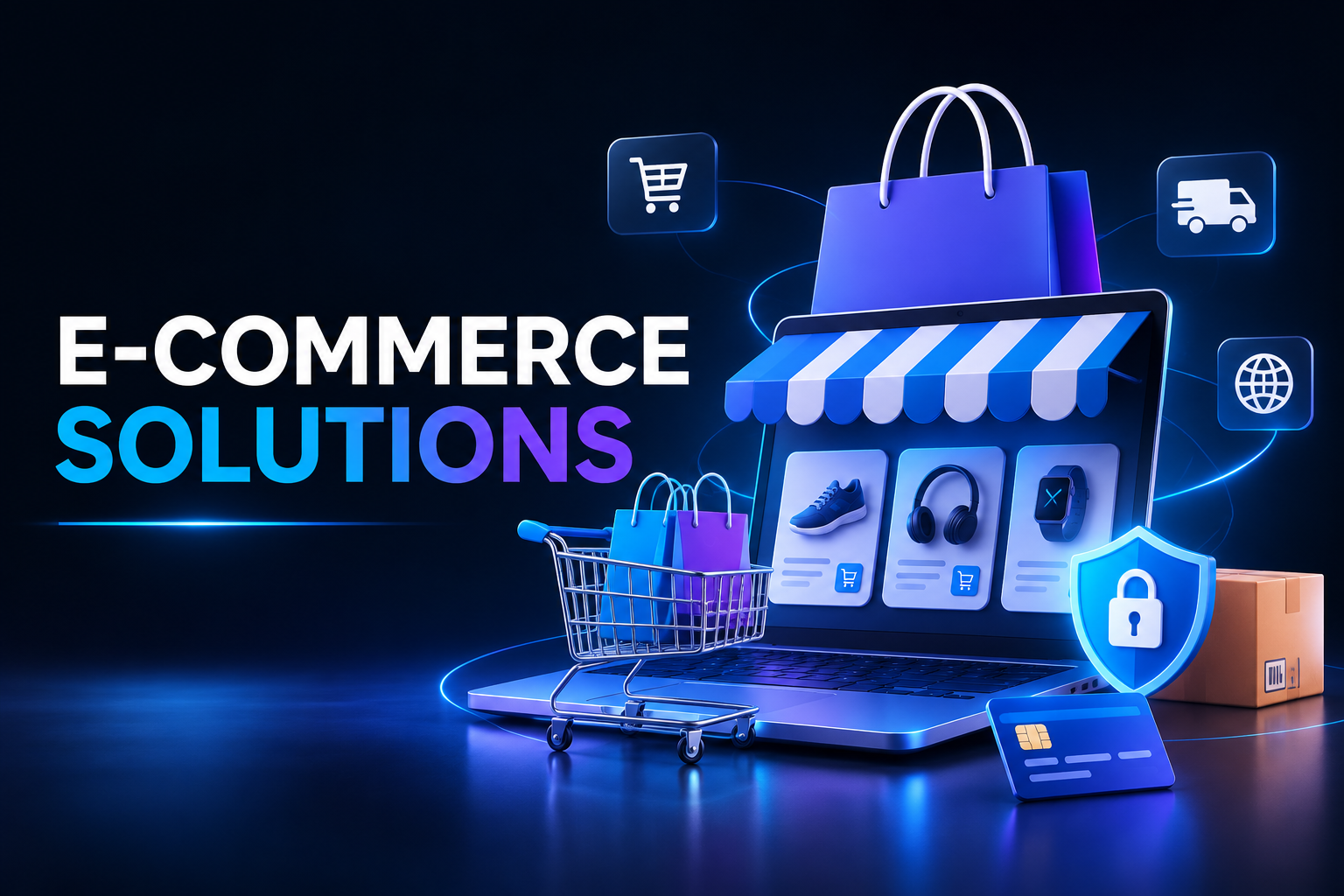
Our E-commerce Development Services
1. Custom E-commerce Website Development
Every online business has its own products, sales processes and customer requirements. A ready-made platform may cover standard store functionality, but some businesses need additional features or customized workflows.
Gaffis provides custom e-commerce development to help businesses implement functionality based on their specific requirements.
Our custom development work can include:
- Custom product catalog functionality
- Product categories and attributes
- Customer account management
- Shopping cart customization
- Checkout process customization
- Custom pricing and product rules
- Order management functionality
- Inventory-related features
- Customer dashboards
- Admin-side management modules
- Third-party API integrations
- Custom business workflows
We consider the requirements of your store before recommending a suitable platform or development approach.
2. WooCommerce Development Services
WooCommerce is an e-commerce solution built for WordPress. It allows businesses to turn a WordPress website into an online store and manage products, orders, payments and other store operations.
Gaffis can help businesses develop and customize WooCommerce stores according to their product and operational requirements.
Our WooCommerce development services can include:
- WooCommerce store setup and configuration
- Product and category setup
- Variable and simple product configuration
- WooCommerce theme customization
- Custom WooCommerce functionality
- Plugin configuration and integration
- Custom plugin development
- Shopping cart and checkout improvements
- Payment gateway integration
- Shipping method configuration
- Tax and order settings
- Inventory management configuration
- WooCommerce performance improvements
- Store troubleshooting and maintenance
WooCommerce customization: If the standard platform functionality does not meet your requirements, custom development can help extend the store with additional features and workflows.
WooCommerce can be a suitable option for businesses that want to manage their online store within the WordPress ecosystem.
3. Shopify Store Development
Shopify is a hosted e-commerce platform that allows businesses to create and manage online stores without maintaining the entire hosting infrastructure themselves.
We can help businesses with Shopify store setup, customization and technical improvements based on their requirements.
Shopify-related services can include:
- Shopify store setup and configuration
- Product and collection organization
- Theme customization
- Store functionality improvements
- Shopify app configuration
- Third-party app integration
- Payment provider configuration
- Shipping and delivery settings
- Checkout-related configuration where supported
- Custom storefront functionality
- Product data management
- Store migration planning
- Technical troubleshooting and support
Shopify customization: We can help adapt supported themes, apps and store functionality to match your business processes. Where a requirement involves platform restrictions, app capabilities or Shopify plan limitations, we evaluate the available implementation options first.
Shopify can be a practical choice for businesses looking for a managed e-commerce platform with store administration and an established app ecosystem.
4. E-commerce Platform Development and Customization
The platform you choose influences how your online store is developed, managed and expanded.
Depending on the project requirements, we can work with established e-commerce platforms and technologies.
WooCommerce: Suitable for businesses using WordPress that need product management, checkout, payments and customizable store functionality.
Shopify: Suitable for businesses looking for a hosted platform with built-in store management and supported integrations.
Magento / Adobe Commerce: A platform option for more complex commerce requirements, subject to the project's technical scope and platform needs.
PrestaShop: An e-commerce platform that can support product catalogs, orders and store customization.
OpenCart: An online store platform that can be considered for projects requiring product, cart and order management functionality.
Custom PHP-based solutions: For businesses that need specific workflows or functionality beyond standard platform capabilities, custom development may be considered.
The best platform is not necessarily the one with the most features. It is the one that fits your products, operations, budget, technical requirements and future plans.
5. Payment Gateway Integration
A payment gateway allows an online store to connect with payment services so customers can pay for their orders using supported payment methods.
The payment options available to a store depend on the gateway provider, country, currency, business eligibility and platform compatibility.
Gaffis can assist with payment gateway integration and configuration according to the selected platform and project requirements.
Payment integration work can include:
- Payment gateway setup
- API-based payment integration
- Checkout payment configuration
- Payment status handling
- Transaction confirmation workflows
- Payment success and failure handling
- Order status synchronization
- Test transactions and integration checks
- Troubleshooting payment-related issues
Depending on availability and project requirements, payment service options may include:
- PayPal
- Stripe
- Authorize.Net
- SagePay / Opayo
- Other supported regional payment providers
The final provider selection should be based on your business location, supported currencies, transaction requirements, fees, settlement options and platform compatibility.
Secure payment handling: Payment integration should follow the selected provider's technical requirements and security guidance. Sensitive payment information should be handled through appropriate provider-supported methods rather than stored unnecessarily within the website.
6. Shipping and Delivery Method Integration
Shipping is an important part of an e-commerce operation. Customers need clear delivery options, and store owners need a practical way to calculate shipping charges and manage fulfillment.
We can help configure shipping methods and integrate supported shipping services according to your store's requirements.
Shipping-related functionality can include:
- Flat-rate shipping
- Free shipping rules
- Local delivery options
- Local pickup configuration
- Weight-based shipping
- Price-based shipping
- Location-based shipping rules
- Multiple shipping zones
- Shipping provider integration
- Delivery charge calculation
- Shipment tracking links
- Order fulfillment workflows
- Shipping status updates
Where supported by the platform and shipping provider, integrations can help connect your store with courier or logistics services.
Possible shipping integrations may include services such as FedEx, UPS, DHL and other regional courier providers, subject to account availability, API access, service coverage and platform compatibility.
Why shipping integration matters: A well-configured shipping process helps customers understand delivery costs and options before completing an order. It can also reduce manual work involved in processing and fulfilling orders.
7. Product and Category Management
A well-organized product catalog makes it easier for customers to browse an online store and find relevant products.
We can configure product management functionality based on the platform and store requirements.
This can include:
- Product listing setup
- Product category organization
- Product descriptions and specifications
- Product images and media fields
- Product variations and attributes
- SKU and product identification fields
- Product pricing configuration
- Sale prices and promotional pricing
- Stock status management
- Related and cross-sell products
- Product filters and sorting
- Bulk product management options
For stores with larger catalogs, product organization and filtering can be particularly important to the shopping experience.
8. Shopping Cart and Checkout Development
The shopping cart and checkout process connect product selection with order completion. Confusing steps or missing information can make it difficult for customers to complete a purchase.
We can configure and customize shopping cart and checkout functionality according to the platform's available features and the store's requirements.
Our work may include:
- Add-to-cart functionality
- Cart quantity updates
- Product removal and cart editing
- Coupon code application
- Shipping charge display
- Tax calculation configuration
- Customer information forms
- Guest checkout options where supported
- Customer account checkout
- Payment method selection
- Order summary and confirmation
- Checkout-related error troubleshooting
The goal is to make the purchase process clear and functional while supporting the store's operational requirements.
9. Inventory and Order Management
Managing product availability and customer orders is essential for day-to-day e-commerce operations.
We can help configure inventory and order-related features so businesses can manage store activity through their platform.
Depending on the platform, this may include:
- Stock quantity management
- Low-stock notifications
- Product availability status
- Order creation and processing
- Order status updates
- Customer order history
- Refund and cancellation workflows
- Order notifications
- Inventory synchronization through supported integrations
- Administrative order management
For businesses using separate inventory or enterprise systems, API integration may be considered where suitable connectivity is available.
10. E-commerce Theme and Functionality Customization
An e-commerce platform may provide standard themes and extensions, but businesses sometimes need specific changes to support their product catalog or shopping process.
Our customization work focuses on implementing the required store functionality and adapting supported platform components.
This can include:
- Theme and template customization
- Product page functionality
- Category page functionality
- Navigation and filtering behavior
- Cart and checkout customization
- Store-specific modules
- Plugin and app configuration
- Custom extensions
- Existing feature improvements
- Platform compatibility checks
The scope of customization depends on the platform, its available development interfaces and the requested functionality.
11. E-commerce Plugin, App and Extension Integration
Plugins, apps and extensions can add functionality to an online store without developing every feature from the beginning.
We can assist with selecting, configuring and integrating suitable extensions according to your store's requirements.
Examples include:
- Payment extensions
- Shipping extensions
- Product filter tools
- Inventory-related extensions
- Marketing integrations
- Customer review functionality
- Analytics integrations
- CRM connectivity
- Email notification tools
- Store management extensions
Where existing extensions are not sufficient, custom development may be considered. Before implementation, compatibility, licensing, security and ongoing maintenance requirements should be reviewed.
12. Third-Party API and Business System Integration
An online store may need to exchange information with systems outside its e-commerce platform.
API integration can help connect the store with supported business services.
Possible integration requirements include:
- Payment platforms
- Shipping and logistics systems
- Customer relationship management platforms
- Inventory management systems
- Accounting and invoicing tools
- Email marketing platforms
- Customer communication services
- Business reporting systems
- Mobile applications
For example, an order placed on an e-commerce website may be transferred to an inventory or order management system through an available integration.
The exact integration depends on the API documentation, account permissions, data structure and capabilities of the connected platforms.
13. E-commerce Website SEO
An online store needs more than products and checkout functionality. Search engine optimization can help search engines understand product pages, categories and the overall structure of the store.
Our broader digital marketing and SEO capabilities can support e-commerce visibility through activities such as:
- Product page SEO
- Category page optimization
- SEO-friendly URLs
- Product title and description improvements
- Metadata optimization
- Internal linking
- Image optimization and descriptive alt text
- Technical SEO checks
- XML sitemap configuration
- Canonical URL review
- Structured data implementation where appropriate
- Website performance improvements
- E-commerce content planning
E-commerce SEO should be planned alongside the store's product structure and technical implementation. It is not a guarantee of search rankings or sales, but it can help establish a stronger foundation for organic discovery.
14. E-commerce Performance Optimization
A store needs to handle product browsing, search, cart operations and checkout without unnecessary delays.
Depending on the platform and technical setup, performance work can include:
- Reviewing page loading behavior
- Image and media optimization
- Reducing unnecessary scripts
- Reviewing plugin and app impact
- Browser caching configuration
- Database optimization
- Code-level improvements
- Reviewing third-party integrations
- Mobile performance checks
- Identifying technical bottlenecks
The available improvements depend on the hosting environment, platform architecture, installed extensions and existing code.
15. E-commerce Security and Maintenance
An online store processes business and customer-related information, so ongoing maintenance is an important part of managing it.
Our technical support can include:
- Platform and software updates
- Plugin and extension updates
- Theme compatibility checks
- Security-related maintenance
- Backup support
- Website error troubleshooting
- Payment integration checks
- Store functionality testing
- Database maintenance
- Performance reviews
- Technical support for new requirements
Security measures should be selected according to the store's platform, hosting environment, payment provider and data-handling requirements.
E-commerce Solutions for Different Business Models
Different types of online businesses require different store structures and features. We consider the business model when planning an e-commerce solution.
B2C E-commerce Stores
Business-to-consumer stores sell products directly to individual customers. Common requirements include product catalogs, customer accounts, shopping carts, payment options, shipping and order tracking.
B2B E-commerce Solutions
Business-to-business stores may require additional functionality such as business accounts, customer-specific pricing, bulk ordering, quotation requests and approval workflows.
Fashion and Apparel Stores
Fashion stores may need product variations for size and color, product filters, inventory tracking, promotional pricing and category organization.
Electronics and Gadget Stores
Electronics stores may require detailed product specifications, product comparisons, warranty information, inventory management and structured product categories.
Health and Beauty Stores
These stores may need product attributes, product variations, category filters, customer reviews and clear product information.
Food and Beverage Stores
Depending on the business model, these stores may need delivery areas, local pickup, product availability rules, order scheduling and location-specific shipping options.
Multi-Product Online Stores
Businesses managing large product catalogs may need advanced product organization, search, filtering, bulk updates and inventory-related integrations.
Our E-commerce Website Development Process
We follow a requirement-led approach to plan and develop e-commerce solutions.
Step 1: Business and Store Requirement Analysis
We understand your products, target customers, business model, expected store functionality and operational requirements.
Step 2: Platform Selection
We evaluate whether WooCommerce, Shopify, another suitable platform or custom development is appropriate for the project.
Step 3: Functional Planning
We identify the required product structure, customer features, cart and checkout functionality, payment options, shipping methods and integrations.
Step 4: E-commerce Development
We implement the store functionality, platform configuration, custom modules and required integrations according to the agreed scope.
Step 5: Payment and Shipping Configuration
We configure supported payment methods and shipping options based on the selected providers, account access and business requirements.
Step 6: Testing and Quality Assurance
We check important store functions, including product browsing, cart operations, checkout, payment workflows, shipping settings and order processing.
Step 7: Launch and Deployment
After the required checks, the store is prepared for launch in the appropriate hosting or platform environment.
Step 8: Ongoing Support and Improvements
After launch, we can support maintenance, troubleshooting, platform updates and further functionality improvements according to the agreed scope.
WooCommerce vs. Shopify: Which Platform Should You Choose?
WooCommerce and Shopify are both established e-commerce options, but they work differently. The right choice depends on your business requirements and preferred store management approach.
| Consideration | WooCommerce | Shopify |
|---|---|---|
| Platform model | WordPress-based e-commerce plugin | Hosted e-commerce platform |
| Hosting | Requires suitable WordPress hosting | Hosting is included in the hosted platform |
| Customization | Flexible through themes, plugins and development | Customization through themes, apps and supported development tools |
| Content management | Uses WordPress CMS | Includes Shopify's content and store management features |
| Extensions | WooCommerce plugins and WordPress extensions | Shopify apps and supported integrations |
| Maintenance | WordPress, hosting, plugins and updates need attention | Platform infrastructure is managed by Shopify; store configuration and app maintenance still matter |
| Suitable for | Businesses seeking WordPress integration and customization | Businesses seeking a managed e-commerce platform |
Our recommendation: Choose the platform after considering your product catalog, technical requirements, available resources, integrations, maintenance preferences and long-term plans. Neither platform is automatically the right choice for every business.
Why Choose Gaffis for E-commerce Development?
Developing an online store involves connecting multiple components into one working system. Gaffis approaches e-commerce projects by considering both the customer-facing store functionality and the operational requirements behind it.
- Platform-based development: Work with e-commerce platforms such as WooCommerce and Shopify according to project requirements.
- Custom functionality: Add or customize features to support specific business processes.
- Payment integration: Configure supported payment gateways and checkout-related functionality.
- Shipping configuration: Implement suitable shipping methods and supported logistics integrations.
- Product and order management: Develop or configure features that support product catalogs, stock and order operations.
- API integration: Connect the store with supported external services and business systems.
- SEO and technical considerations: Account for store structure, technical SEO and performance during development.
- Ongoing technical support: Arrange maintenance and improvements according to the agreed project scope.
Our objective is to build an e-commerce solution that fits the way your business sells, manages orders and serves customers.
Frequently Asked Questions
1. What e-commerce development services does Gaffis provide?
2. Can you develop an e-commerce website using WooCommerce?
3. Do you provide Shopify store development?
4. What is the difference between WooCommerce and Shopify?
5. Can you integrate payment gateways into an e-commerce website?
6. Which payment gateways can be integrated?
7. Can you integrate shipping methods into my online store?
8. Can you integrate FedEx, UPS or DHL?
9. Can you customize WooCommerce themes and plugins?
10. Can you add custom features to a Shopify store?
11. Can you migrate an existing online store?
12. Can an e-commerce website be connected to a CRM or inventory system?
13. Do you provide e-commerce SEO services?
14. Will my online store work on mobile devices?
15. Do you provide maintenance after the e-commerce website is launched?
16. How much does e-commerce website development cost?
17. How long does it take to develop an e-commerce website?
Ready to Build Your Online Store?
Your online store should make it easier for customers to discover products, place orders and complete payments while giving your team the functionality needed to manage daily operations.
Whether you need a WooCommerce store, Shopify development, custom e-commerce functionality, payment gateway integration or shipping configuration, Gaffis Technologies can help you plan a solution around your business requirements.
Let's discuss your e-commerce project.
Contact Gaffis Technologies Pvt. Ltd. to share your requirements and explore the right development approach for your online business.
Why Gaffis for E-commerce?
Trending Services
IT & Software Services
We provide a variety of web development, internet marketing
solutions and e-commerce solutions.