

Web design trends continue to evolve as businesses compete to deliver better user experiences and achieve higher search engine rankings. Today, a website is much more than an online presence—it’s a powerful marketing tool that influences how customers perceive your brand and interact with your business.
Search engines like Google prioritize websites that offer fast performance, mobile responsiveness, and a seamless user experience. As a result, businesses that embrace modern web design trends are more likely to improve their SEO performance, increase engagement, and convert visitors into customers.
Why Modern Web Design Matters for SEO
Website design and SEO are closely connected. A visually appealing website may attract visitors, but if it loads slowly or is difficult to navigate, users will leave quickly. Search engines interpret these signals as poor user experience, which can negatively impact rankings.
A well-designed website helps:
- Improve page speed
- Enhance mobile usability
- Reduce bounce rates
- Increase user engagement
- Boost conversion rates
- Strengthen brand credibility
By focusing on both design and functionality, businesses can create a website that satisfies users and search engines alike.
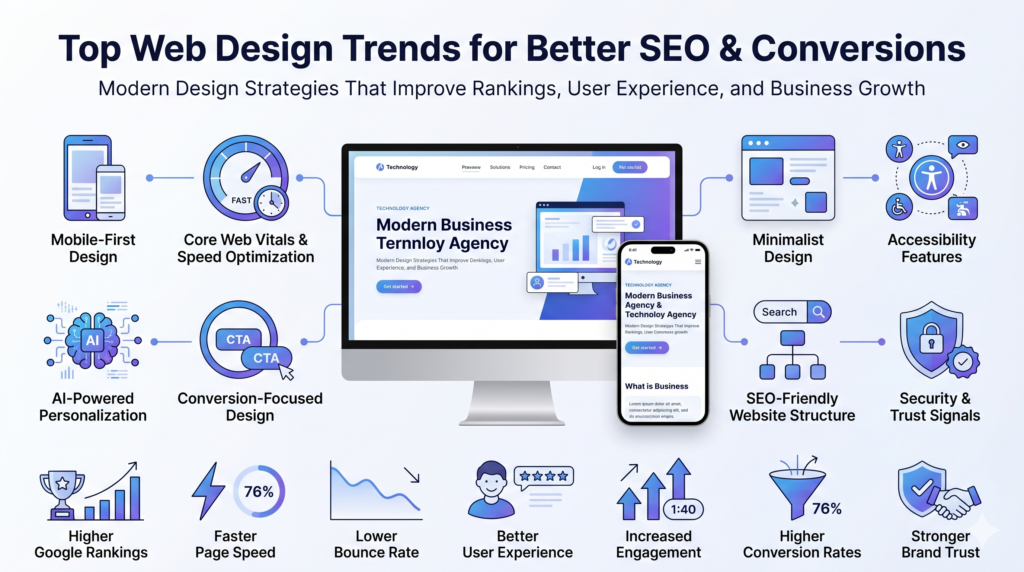
Mobile-First Design Is Essential
With the majority of internet users browsing on smartphones, mobile-first design has become a necessity. Google uses mobile-first indexing, meaning it primarily evaluates the mobile version of your website when determining rankings.
Key features of mobile-friendly websites include:
- Responsive layouts
- Fast-loading pages
- Easy-to-click buttons
- Readable fonts
- Simplified navigation
A mobile-optimized website not only improves SEO but also ensures visitors enjoy a seamless browsing experience regardless of their device.
Core Web Vitals and Website Performance
Google’s Core Web Vitals measure how users experience your website. These performance metrics focus on loading speed, responsiveness, and visual stability.
To improve Core Web Vitals:
- Optimize image sizes
- Minimize unnecessary code
- Enable browser caching
- Use a Content Delivery Network (CDN)
- Improve server response times
Faster websites create better user experiences and contribute to stronger search engine visibility.
AI-Powered Personalization
Artificial Intelligence is transforming how websites interact with users. Modern websites can now personalize content based on visitor behavior and preferences.
Examples include:
- Smart chatbots
- Personalized recommendations
- Predictive search features
- Dynamic content displays
These features increase engagement, encourage visitors to spend more time on the website, and improve conversion opportunities.
Minimalist Design Improves User Experience
One of the most effective web design trends is minimalist design. Clean layouts with ample white space help users focus on important information without distractions.
Benefits of minimalist design include:
- Better readability
- Faster page loading
- Improved navigation
- Enhanced mobile usability
A simple and organized website structure allows users to find information quickly, leading to higher satisfaction and engagement.
Accessibility Matters More Than Ever
Website accessibility ensures that all users, including individuals with disabilities, can access and navigate your content effectively.
Accessibility best practices include:
- Adding alt text to images
- Using clear heading structures
- Providing sufficient color contrast
- Ensuring keyboard navigation compatibility
Accessible websites often reach a wider audience while supporting SEO and user experience goals.
Conversion-Focused Design Strategies
Driving traffic is only valuable if visitors take action. Conversion-focused web design helps guide users toward specific goals such as contacting your business, requesting a quote, or making a purchase.
Effective conversion elements include:
- Clear call-to-action buttons
- Customer testimonials
- Trust badges and certifications
- Easy-to-use contact forms
When combined with strong SEO practices, these elements can significantly improve lead generation and sales performance.
 Frequently Asked Questions
Do web design trends affect SEO?
Yes. Modern web design influences page speed, mobile usability, user engagement, and overall website performance, all of which impact search rankings.
What is the most important web design trend today?
Mobile-first design remains one of the most important trends because it directly affects user experience and search engine visibility.
Can web design improve conversions?
Absolutely. A well-designed website helps users navigate easily, find information quickly, and complete desired actions, leading to higher conversion rates.
Conclusion
Modern web design trends play a critical role in improving SEO, enhancing user experience, and increasing conversions. From mobile-first design and Core Web Vitals optimization to AI-powered personalization and accessibility improvements, businesses that invest in modern website design gain a significant competitive advantage.
Ready to transform your website into a high-performing digital asset? Contact our web design and SEO experts today to build a website that ranks higher, engages visitors, and drives measurable business growth.
+