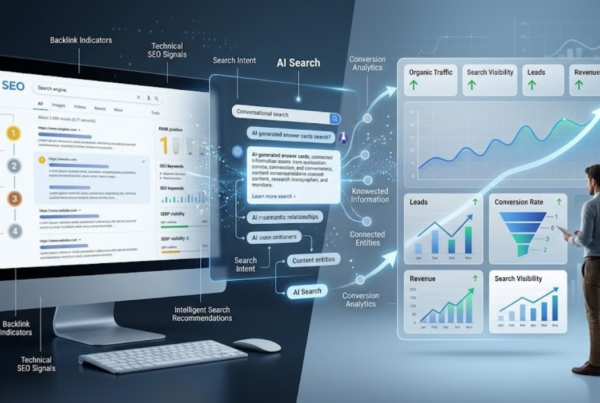

GEO vs SEO is quickly becoming one of the most important topics in digital marketing as Google AI Overviews reshape how users discover information online.
For years, Search Engine Optimisation (SEO) focused on ranking webpages in traditional search results. But in 2026, businesses must also optimise for AI-generated answers that appear directly within Google Search.
In this guide, you’ll learn the differences between GEO and SEO, how Google AI Overviews work, and what strategies can help your content stay visible as search continues to evolve.
What Is GEO (Generative Engine Optimisation)?
Generative Engine Optimization (GEO) is the process of optimizing content so AI-powered search engines can easily understand, cite, and recommend it within generated answers.
Unlike traditional SEO, GEO focuses on helping AI models extract, summarize, and reference your content.
GEO Optimization Focuses On:
- Structured and factual content
- Clear answers to user questions
- Entity-based optimization
- Authoritative sources and citations
- Conversational search intent
- AI-readable formatting
As AI search becomes more prominent, GEO is no longer optional for brands that want maximum online visibility.
What Is SEO?
Search Engine Optimization (SEO) is the practice of improving a website’s visibility in traditional search engine results.
SEO helps webpages rank for relevant keywords through:
- Technical optimization
- Content creation
- Link building
- User experience improvements
- On-page optimization
SEO remains essential because traditional organic listings still drive significant traffic and conversions.
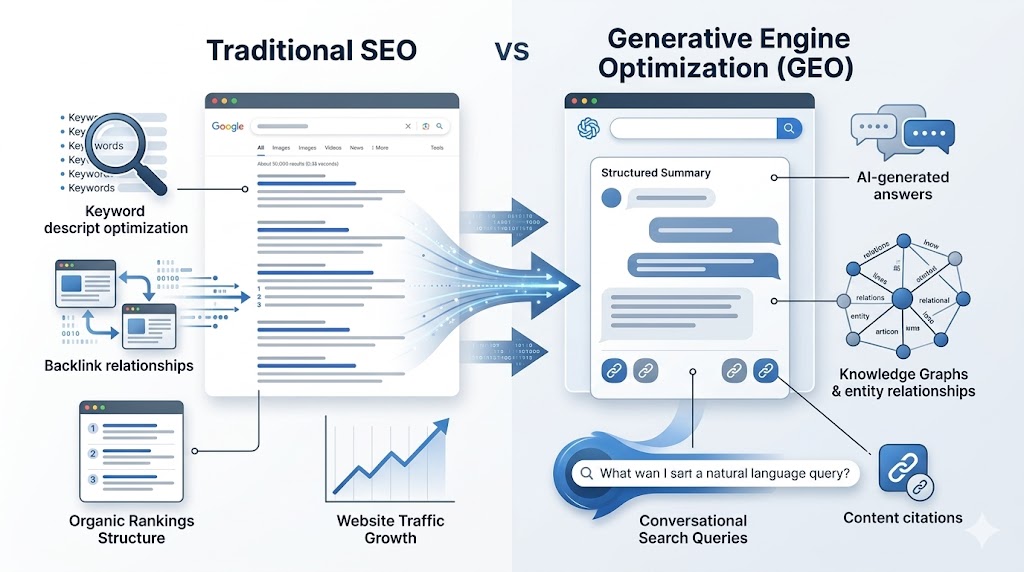 GEO vs SEO: Key Differences
| Factor | GEO | SEO |
| Primary Goal | Appear in AI-generated answers | Rank in organic search results |
| Focus | AI understanding and citation | Search engine ranking |
| Content Style | Conversational and answer-focused | Keyword-focused and comprehensive |
| Success Metric | AI mentions and citations | Organic rankings and traffic |
| Search Environment | AI Overviews and AI assistants | Traditional SERPs |
The Reality in 2026
The best-performing websites don’t choose between GEO and SEO.
They combine both.
Businesses that integrate GEO with traditional SEO strategies are seeing stronger visibility across Google’s entire search ecosystem.
How Google AI Overviews Choose Content
Google AI Overviews analyze multiple sources before generating answers.
Research and industry observations show that AI systems favor content that demonstrates:
Expertise
Content created by knowledgeable professionals tends to be cited more frequently.
Authority
Strong brand signals, quality backlinks, and topical relevance improve trust.
Accuracy
AI systems prioritize factual and verifiable information.
Structure
Content organized with headings, lists, tables, and FAQs is easier for AI to understand.
User Intent Matching
The content must directly answer the searcher’s question.
7 GEO Strategies That Work in 2026
1. Answer Questions Directly
Place concise answers immediately below headings.
This increases the chances of AI extraction.
2. Build Topic Clusters
Create comprehensive content hubs around your niche.
Example:
- Main Guide
- Supporting Articles
- FAQs
- Case Studies
3. Use Entity Optimization
Mention relevant brands, products, services, locations, and industry terminology naturally.
4. Include Statistics and Sources
Trustworthy data improves credibility and citation potential.
5. Improve Content Structure
Use:
- H2 headings
- H3 subheadings
- Bullet lists
- Tables
- FAQ sections
6. Demonstrate E-E-A-T
Google continues emphasizing:
- Experience
- Expertise
- Authoritativeness
- Trustworthiness
7. Optimize for Conversational Queries
Many AI searches are phrased as questions.
Examples:
- What is GEO?
- How does GEO differ from SEO?
- How can I rank in AI Overviews?
Why Businesses Need Both GEO and SEO
Relying only on SEO may limit visibility as AI-generated results occupy more search real estate.
Meanwhile, relying only on GEO can reduce visibility in traditional search rankings.
A balanced strategy delivers:
- More organic traffic
- Greater brand visibility
- Increased authority
- Higher conversion opportunities
- Better future-proofing against search changes
Internal Resources You Should Create
To strengthen topical authority, link this article to:
- GEO Services Page
- SEO Services Page
- Google AI Overview Optimization Guide
- Technical SEO Checklist
- Content Marketing Strategy Guide
- Local SEO Resource Center
Strategic internal linking improves crawlability and reinforces topical relevance.
Frequently Asked Questions
Is GEO replacing SEO?
No. GEO complements SEO rather than replacing it. Businesses need both strategies to maximize visibility in traditional and AI-powered search environments.
Can small businesses rank in Google AI Overviews?
Yes. Well-structured, authoritative, and user-focused content can be cited regardless of business size.
What type of content performs best for GEO?
Content that provides clear answers, trustworthy information, structured formatting, and strong topical authority tends to perform best.
Do backlinks still matter for GEO?
Yes. Backlinks remain a strong trust signal and help establish authority that AI systems often consider when selecting sources.
How can I measure GEO success?
Track AI Overview appearances, brand mentions, citation frequency, visibility across AI platforms, and overall organic performance.
Final Thoughts
The future of search isn’t GEO or SEO—it’s GEO and SEO working together.
As Google AI Overviews continue expanding in 2026, businesses that create authoritative, structured, and user-focused content will have the greatest opportunity to appear both in traditional search results and AI-generated answers.
Ready to Improve Your AI Search Visibility?
Whether you’re looking to increase rankings, appear in Google AI Overviews, or build a future-proof digital marketing strategy, now is the time to invest in GEO and SEO together.
Contact our team today to develop a customized GEO + SEO strategy that drives more visibility, traffic, and conversions in 2026 and beyond. visit our website www.gaffis.com for more.