

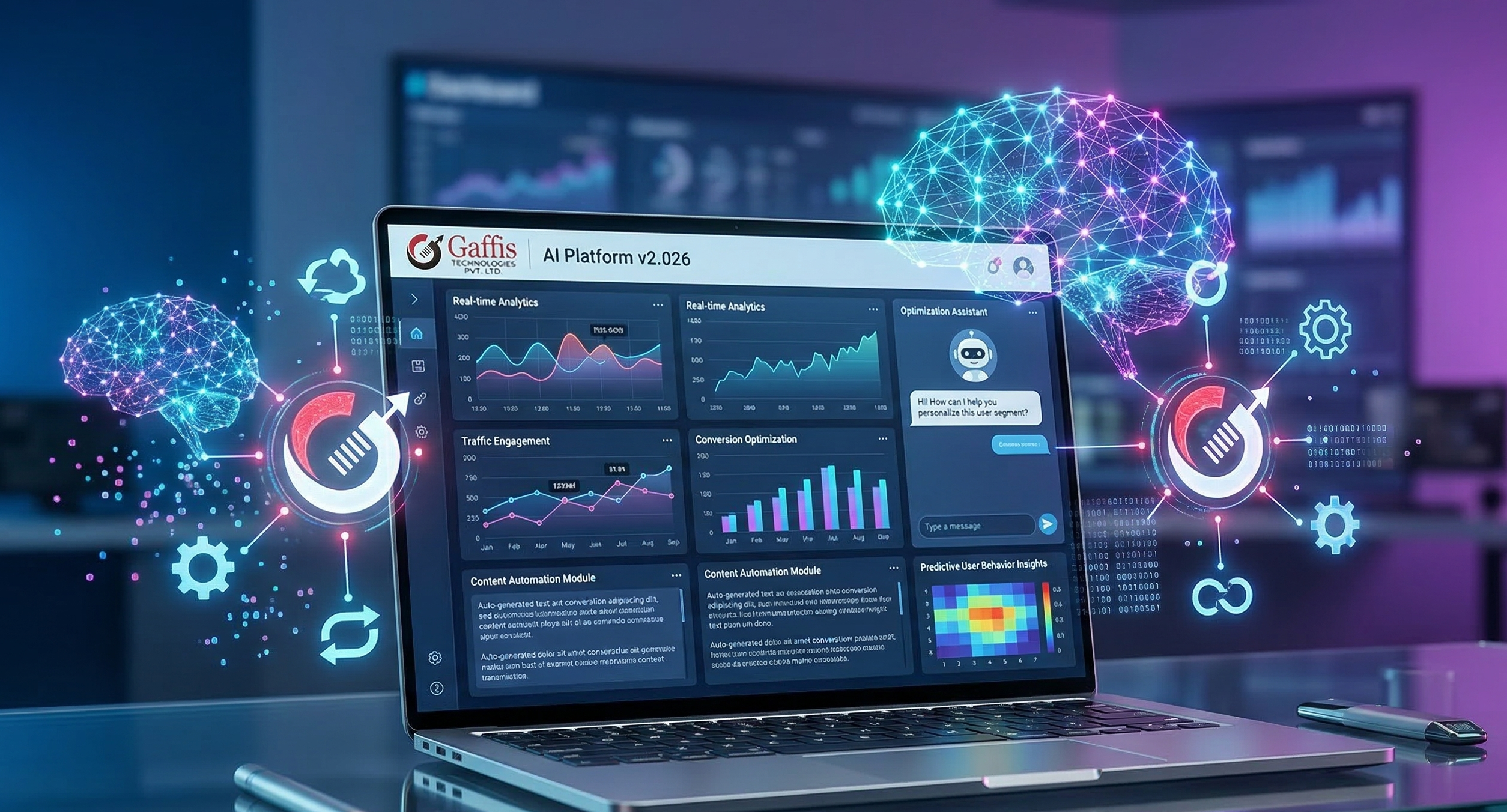
How AI is Transforming Modern Web Applications in 2026 is no longer just a futuristic concept—it’s the defining force reshaping how websites function, interact, and deliver value to users.
From hyper-personalized experiences to intelligent automation, AI is fundamentally changing the architecture and capabilities of modern web applications. Businesses that fail to adapt risk falling behind in a landscape where users now expect smarter, faster, and more intuitive digital experiences.
Let’s break down exactly what’s happening, why it matters, and how you can leverage it.
Why AI Matters in Web Applications Today
The web is no longer static or even just interactive—it’s becoming intelligent.
Users today expect:
- Instant responses
- Personalized recommendations
- Seamless navigation
- Predictive experiences
AI enables all of this by analyzing behavior, learning patterns, and making real-time decisions.
Key Industry Shift:
- Over 80% of user interactions are expected to be AI-assisted by 2026
- Businesses using AI-driven personalization see 20–30% higher engagement rates
What is AI in Modern Web Applications?
AI in web applications refers to integrating machine learning algorithms, natural language processing (NLP), and automation systems into websites and web platforms.
Core AI Technologies Used:
- Machine Learning (ML)
- Natural Language Processing (NLP)
- Computer Vision
- Predictive Analytics
- Chatbots & Virtual Assistants
How AI is Transforming Modern Web Applications in 2026
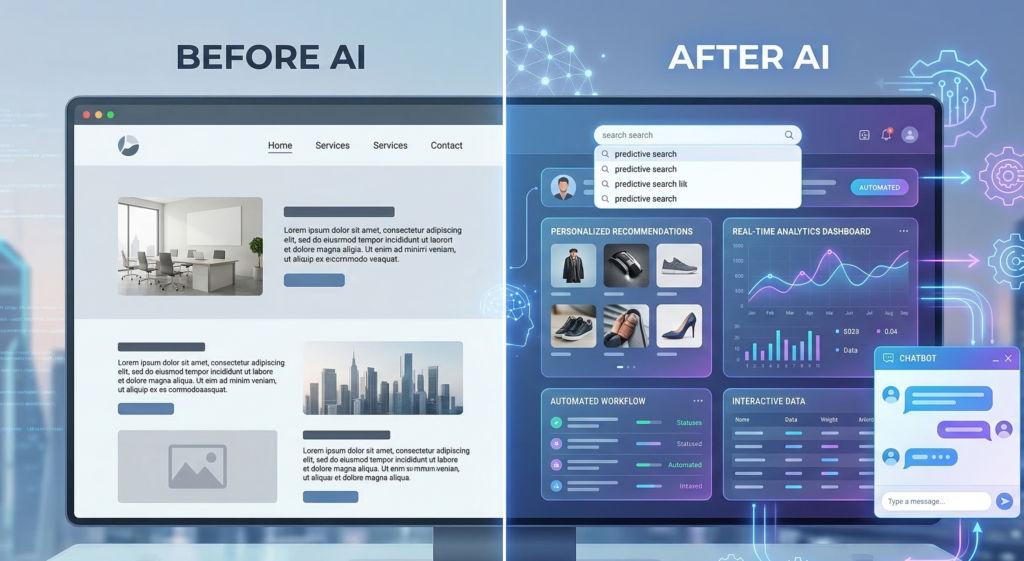 1. Hyper-Personalization at Scale
AI analyzes user data such as:
- Browsing behavior
- Purchase history
- Time spent on pages
This allows web apps to deliver:
- Personalized content
- Dynamic landing pages
- Tailored product recommendations
???? Example: E-commerce platforms showing products based on real-time user behavior.
2. AI-Powered Chatbots & Virtual Assistants
Modern web apps now include intelligent chatbots that:
- Answer queries instantly
- Provide 24/7 customer support
- Guide users through processes
Benefits:
- Reduced customer support costs
- Increased conversion rates
- Improved user satisfaction
3. Predictive User Experience (UX)
AI predicts what users want before they even ask.
Features include:
- Smart search suggestions
- Auto-complete inputs
- Predictive navigation
???? Example: Streaming platforms recommending content based on viewing habits.
4. Advanced Data Analytics & Insights
AI processes massive datasets to uncover:
- User behavior trends
- Conversion patterns
- Performance bottlenecks
Business Impact:
- Better decision-making
- Optimized marketing strategies
- Improved ROI
5. Voice Search & Conversational Interfaces
Voice-based interactions are rapidly growing.
AI enables:
- Voice commands
- Conversational UI
- Speech-to-text processing
Why It Matters:
- Improves accessibility
- Aligns with voice search SEO
- Enhances mobile user experience
6. Automated Code Generation & Development
AI tools now assist developers by:
- Writing code snippets
- Detecting bugs
- Suggesting improvements
Result:
- Faster development cycles
- Reduced human error
- Lower development costs
7. Enhanced Cybersecurity
AI strengthens web security through:
- Real-time threat detection
- Fraud prevention
- Behavioral anomaly tracking
Key Advantage:
AI can detect threats faster than traditional systems.
Real-World Applications of AI in Web Development
E-commerce Platforms
- Personalized shopping experiences
- Dynamic pricing models
SaaS Applications
- Automated workflows
- Intelligent dashboards
Healthcare Platforms
- AI-driven diagnostics
- Patient data analysis
Fintech Applications
- Fraud detection
- Smart financial recommendations
Benefits of AI in Modern Web Applications
For Businesses:
- Increased conversions
- Better customer insights
- Operational efficiency
For Users:
- Faster experiences
- Relevant content
- Seamless interactions
Challenges of Implementing AI
Despite its advantages, AI comes with challenges:
Key Issues:
- Data privacy concerns
- High implementation costs
- Need for skilled professionals
- Ethical considerations
How to Implement AI in Web Applications (Step-by-Step)
Step 1: Define Your Objective
Identify what problem AI should solve:
- Personalization?
- Automation?
- Analytics?
Step 2: Choose the Right AI Tools
Select platforms or APIs that match your needs.
Step 3: Collect & Prepare Data
AI relies on quality data to function effectively.
Step 4: Integrate AI Models
Embed AI into your web application architecture.
Step 5: Monitor & Optimize
Continuously improve based on performance data.
Future Trends in AI and Web Applications
Looking ahead, AI will continue evolving with:
- AI-generated UI/UX designs
- Fully autonomous web applications
- Real-time emotion detection
- Deeper integration with IoT devices
FAQ: How AI is Transforming Modern Web Applications in 2026
1. What is the role of AI in modern web applications?
AI enhances web applications by enabling automation, personalization, predictive analytics, and improved user experiences.
2. How does AI improve user experience?
AI analyzes user behavior to deliver relevant content, faster responses, and intuitive navigation.
3. Is AI expensive to implement in web applications?
Initial costs can be high, but long-term benefits like automation and efficiency often outweigh the investment.
4. Can small businesses use AI in web development?
Yes, many affordable AI tools and APIs make it accessible for small and medium businesses.
5. What industries benefit most from AI-powered web apps?
E-commerce, healthcare, fintech, SaaS, and education are among the top industries leveraging AI.
The Future is AI-Driven
AI is no longer optional—it’s a competitive necessity.
How AI is Transforming Modern Web Applications in 2026 clearly shows that businesses embracing AI are delivering faster, smarter, and more engaging digital experiences.
If you want to stay ahead:
- Start integrating AI today
- Focus on user experience
- Continuously adapt to emerging trends
???? The sooner you adopt AI, the stronger your position in the future digital ecosystem.
Ready to transform your web application with AI?
Explore cutting-edge strategies and solutions at Gaffis and stay ahead in the AI-powered digital era.