


Why Node.js is the best choice for scalable backend development has become one of the most discussed questions in modern software engineering. As web applications grow larger and user traffic increases, businesses need backend technologies that can scale efficiently without sacrificing performance.
Today, startups and enterprises alike are moving toward high-performance backend frameworks capable of handling millions of requests simultaneously. This is where Node.js stands out.
Built on an event-driven, non-blocking architecture, Node.js allows developers to create fast, scalable, and highly responsive backend systems that power modern applications such as streaming platforms, real-time messaging systems, and e-commerce platforms.
For businesses and tech startups in Pune, India, choosing the right backend technology is crucial for building digital products that can grow without constant infrastructure limitations.
In this guide, we’ll explore why Node.js is the best choice for scalable backend development, how it works, and why developers across the world rely on it for high-traffic applications.
What is Node.js?
Node.js is an open-source, cross-platform JavaScript runtime environment that allows developers to run JavaScript on the server side.
Traditionally, JavaScript was used only in browsers. Node.js changed that by enabling developers to use JavaScript for backend development.
This means developers can build full-stack applications using a single programming language.
Key Characteristics of Node.js
- Event-driven architecture
- Non-blocking I/O model
- Built on Google Chrome’s V8 engine
- Highly scalable and lightweight
- Perfect for real-time applications
Because of these features, Node.js has become a preferred backend technology for modern applications.
Why Node.js is the Best Choice for Scalable Backend Development
1. Event-Driven Architecture Enables High Scalability
Node.js uses an event-driven, asynchronous architecture that allows it to handle multiple client requests simultaneously.
Traditional backend systems create a new thread for every request, which consumes more memory and processing power.
Node.js, on the other hand:
- Handles multiple requests using a single thread
- Uses asynchronous callbacks
- Processes requests faster
This architecture makes Node.js ideal for applications with heavy user traffic.
2. Non-Blocking I/O Improves Performance
One of the biggest reasons developers choose Node.js is its non-blocking input/output model.
Instead of waiting for one task to complete before moving to another, Node.js performs operations asynchronously.
This leads to:
- Faster response times
- Better performance under heavy loads
- Improved application efficiency
For example, a streaming platform or messaging application must process thousands of requests simultaneously — something Node.js handles exceptionally well.
3. Perfect for Real-Time Applications
Node.js is widely used to build real-time applications.
Examples include:
- Chat applications
- Collaboration tools
- Online gaming platforms
- Live streaming services
- Financial trading platforms
Real-time applications require instant data exchange between servers and users, and Node.js provides this through technologies like WebSockets.
4. Huge Ecosystem with NPM
The Node.js ecosystem includes NPM (Node Package Manager), one of the largest software registries in the world.
Developers can access thousands of open-source packages that help accelerate development.
Benefits of NPM include:
- Faster development cycles
- Reusable modules
- Reduced development cost
- Large developer community
This ecosystem significantly boosts productivity for development teams.
5. Ideal for Microservices Architecture
Modern applications often rely on microservices architecture, where applications are divided into smaller services that communicate with each other.
Node.js is highly suitable for microservices because:
- It is lightweight
- It supports modular development
- It allows independent deployment of services
This makes it easier for organizations to scale their applications as user demand increases.
6. Full-Stack JavaScript Development
Another major advantage is the ability to use JavaScript on both frontend and backend.
Developers can build applications using:
- Frontend frameworks
- Backend APIs
- Database integration
This reduces complexity and improves collaboration between development teams.
Popular Companies Using Node.js
Some of the world’s biggest tech companies rely on Node.js for scalable backend systems.
Examples include:
- Netflix
- PayPal
- Uber
- Walmart
These companies chose Node.js because it can handle massive user traffic while maintaining performance.
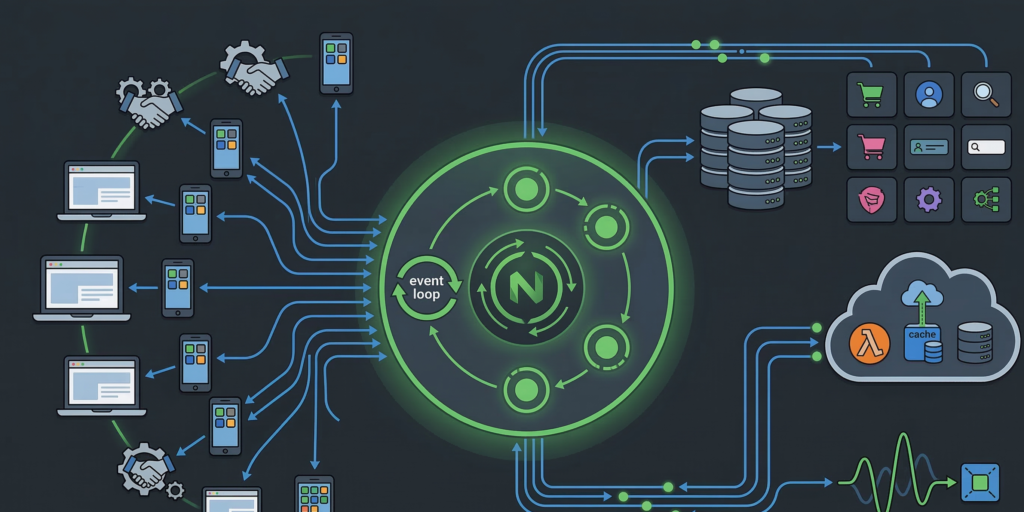
Node.js vs Traditional Backend Technologies
| Feature | Node.js | Traditional Backend |
| Architecture | Event-driven | Thread-based |
| Performance | High | Moderate |
| Scalability | Excellent | Limited |
| Real-time Support | Built-in | Requires additional tools |
| Development Speed | Faster | Slower |
This comparison highlights why Node.js is often considered the best backend technology for scalable applications.
Best Use Cases for Node.js
Node.js is particularly effective for the following types of applications:
Real-Time Applications
Examples include chat systems and collaborative tools.
Streaming Platforms
Platforms delivering audio or video content.
API Development
Building fast RESTful APIs using frameworks like Express.js.
Serverless Applications
Node.js works well with cloud platforms and serverless architecture.
Modern Web Applications
Frameworks such as Next.js can integrate seamlessly with Node.js for full-stack development.
Why Businesses in Pune Are Adopting Node.js
The tech ecosystem in **Pune is growing rapidly, with startups and IT companies building modern web platforms and SaaS products.
Node.js offers advantages that are particularly attractive for startups:
- Faster product development
- Reduced development costs
- Easy scalability
- Strong developer community
These benefits make Node.js a powerful choice for businesses aiming to build scalable digital platforms.
Best Practices for Building Scalable Node.js Applications
To maximize scalability, developers should follow these best practices.
Use Load Balancing
Distribute incoming traffic across multiple servers.
Implement Caching
Use caching systems to reduce database load.
Use Microservices
Divide large applications into smaller independent services.
Monitor Application Performance
Tools like performance monitoring platforms help detect bottlenecks early.
Frequently Asked Questions
Why is Node.js considered scalable?
Node.js uses an event-driven, non-blocking architecture that allows it to handle thousands of concurrent connections efficiently, making it highly scalable.
Is Node.js suitable for enterprise applications?
Yes. Many global companies use Node.js for enterprise-level applications because it supports microservices architecture and handles high traffic efficiently.
What makes Node.js faster than traditional backend systems?
Its single-threaded event loop and asynchronous processing model allow it to handle multiple operations simultaneously without blocking the server.
Can Node.js handle millions of users?
Yes. With proper infrastructure, load balancing, and caching, Node.js applications can support millions of concurrent users.
Is Node.js good for SEO-friendly web applications?
Yes. When combined with frameworks like Next.js, Node.js enables server-side rendering and faster page load speeds, which improve SEO performance.
Node.js has transformed the way modern backend systems are built. Its event-driven architecture, non-blocking I/O model, and massive ecosystem make it one of the most powerful technologies for scalable backend development.
For startups, enterprises, and developers in Pune and across India, adopting Node.js can significantly improve application performance, scalability, and development efficiency.
As businesses continue building real-time platforms and high-traffic applications, Node.js will remain a top choice for scalable backend infrastructure.
If you’re planning to build a scalable web application or modern SaaS platform, choosing the right backend technology is critical. Consider implementing Node.js to create high-performance, scalable, and future-ready digital products.
Contact Gaffis Technology for Queries